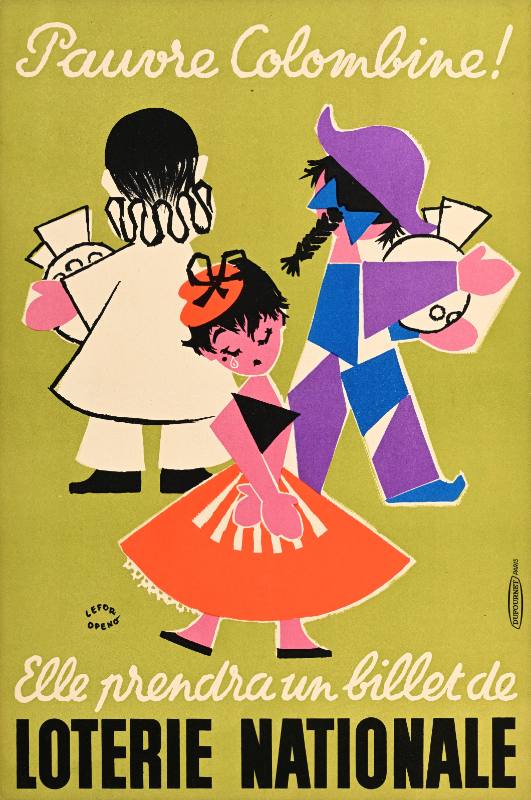
France’s National Lottery was established in July 1933 as a creative means of funding the country’s recovery from World War I, specifically to aid those who had been wounded in battle or whose farms had been destroyed. While most wounded war veterans were eligible for disability pensions, those with extreme facial injuries were exempt as their issues did not technically prevent them from performing physical labor. Known as the gueules cassées (the broken-jawed), this demographic banded together to assert that their disfigurements were accompanied by other serious health problems as well as social discrimination, and that they therefore required official support. While public lotteries had been prohibited in the country since 1836, the government realized that gambling was challenging to regulate and, more importantly, could be used to financially supplement weakened social systems in a struggling economy. The new lottery was intended to be a temporary solution; 60 percent of the profits from the sale of tickets went back to the general public as prize money while 40 percent was distributed to those in need. Unexpectedly, the first lottery proved incredibly popular: demand for tickets far exceeded the number produced and subsequent draws were immediately scheduled. Within a few months, nearly half of the adult population of the country was participating, establishing the National Lottery as a useful addition to the postwar French welfare system.
For inquiries about image licensing, please contact collections@posterhouse.org.